Private local prototype · active refinement. Not released.
Previs
Direct generative video instead of only prompting it—block a simple proportional 3D scene, direct camera and timing, then export a portable Shot Packet carrying structured intent into a video workflow.
- Role
- Creator · product director (provisional)
- Source
- Private source · no license
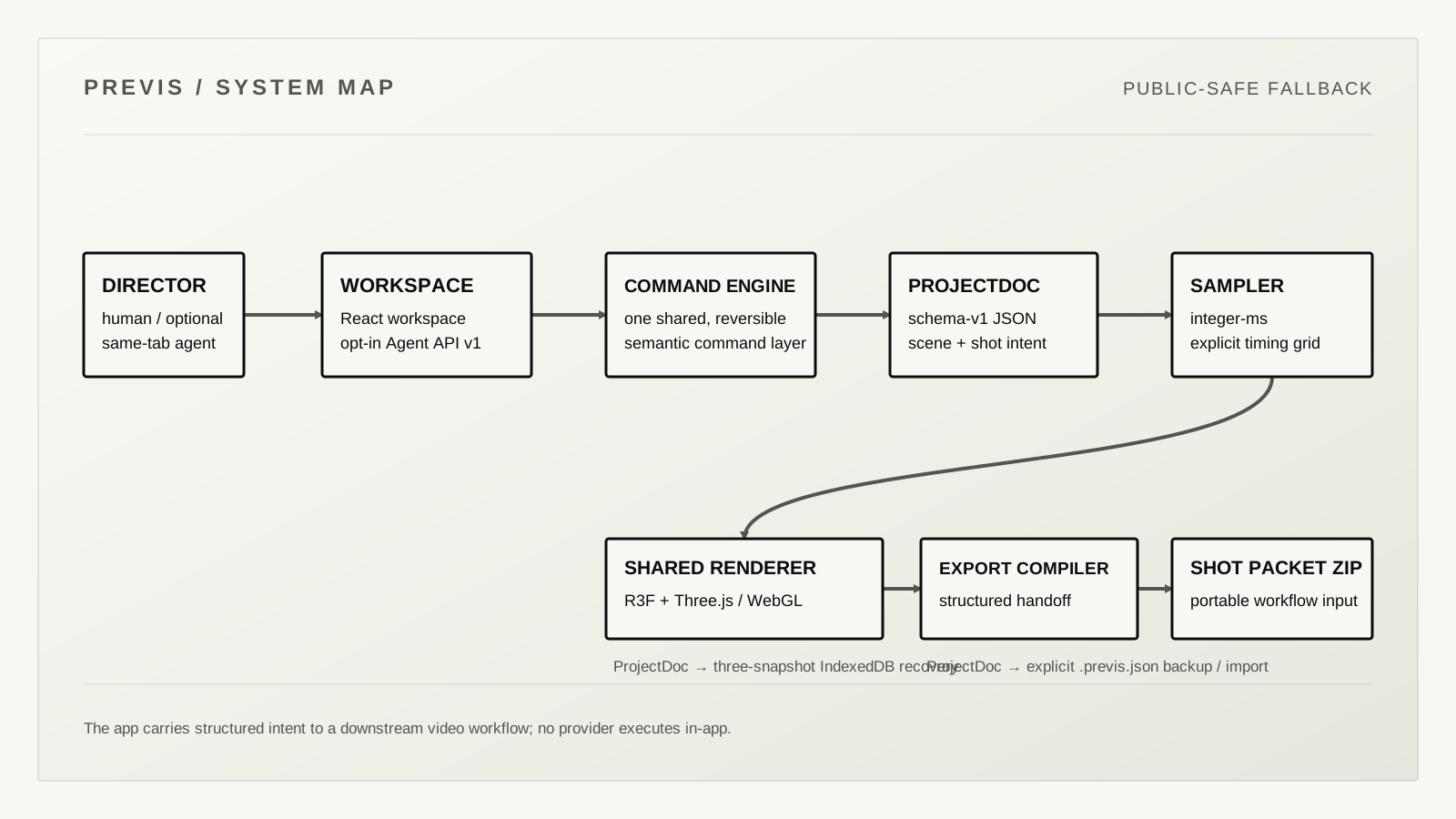
System architecture
One reversible semantic model connects direction, timing, rendering, and portable handoff without executing a provider inside the app.
- Human director / optional same-tab agent
Provides direction through the workspace or opt-in agent surface.
Component 1 - React workspace / opt-in Agent API v1
The direct manipulation and bounded agent entry point.
Component 2 - One shared reversible semantic command engine
Applies the same undoable intent to every surface.
Component 3 - Schema-v1 JSON ProjectDoc
The portable source of scene, shot, camera, and timing intent.
Component 4 - Integer-ms sampler
Samples the document on an explicit temporal grid.
Component 5 - R3F + Three.js shared WebGL renderer
Presents the same scene model for direct review.
Component 6 - Export compiler
Compiles structured intent into a downstream handoff.
Component 7 - Shot Packet ZIP
A portable package for the next video workflow.
Component 8 - Three-snapshot IndexedDB recovery
Keeps recent ProjectDoc snapshots available locally.
Component 9 - Explicit .previs.json backup/import
Makes the document portable outside the app.
Component 10
Relationships
- Human director / optional same-tab agentdirectsReact workspace / opt-in Agent API v1
- React workspace / opt-in Agent API v1commandsOne shared reversible semantic command engine
- One shared reversible semantic command engineupdatesSchema-v1 JSON ProjectDoc
- Schema-v1 JSON ProjectDocsamplesInteger-ms sampler
- Integer-ms samplerdrivesR3F + Three.js shared WebGL renderer
- R3F + Three.js shared WebGL rendererhands offExport compiler
- Export compilercompilesShot Packet ZIP
- Schema-v1 JSON ProjectDocrecoversThree-snapshot IndexedDB recovery
- Schema-v1 JSON ProjectDocbacks up / importsExplicit .previs.json backup/import
A human director or optional same-tab agent directs a React workspace through the opt-in Agent API v1; both use one shared reversible semantic command engine to produce a schema-v1 JSON ProjectDoc. The ProjectDoc feeds an integer-ms sampler and three-snapshot IndexedDB recovery plus explicit .previs.json backup/import. The sampler drives the shared R3F + Three.js WebGL renderer, which feeds an export compiler and Shot Packet ZIP. No provider executes in-app.
Evidence
- Private V37 receipt
- 60 app test files / 681 tests + 2 auditor files / 25 tests.
- Checks
- Passed lint, build, packaged WebKit smoke, real JSON + ZIP export, IndexedDB recovery, and WebGL.
Limitations
- No public availability, source, license, or in-app provider execution.
- No general generation-quality, provider-adherence, or reliable-camera claims.
- No full mobile, accessibility, or cross-browser certification.
Why it exists
Previs keeps directorial judgment in the loop: block a proportional scene, shape the camera and timing, and carry that structured intent into a portable handoff instead of asking a prompt to stand in for the shot.
The local scene-to-Shot-Packet loop is the product boundary. It does not execute a video provider inside the app.
How it works
A shared reversible semantic command engine keeps human direction and the optional same-tab agent on one ProjectDoc. Integer-millisecond sampling drives the shared WebGL renderer, while the same document supports recovery and an explicit backup/import path.
The export compiler packages the structured intent as a Shot Packet ZIP for a downstream video workflow.