Formative Public Beta · Active development · Private source.
Open Ocean Salvage
Working title — fight the waves going out. Ride the waves coming home.
- Name
- Working title
- Role
- Creator & Creative Director
- Access
- Ages 16+ and trusted friends
- Session
- Free · max 2 players
- Platforms
- Desktop, mobile, and tablet enabled; console and VR disabled
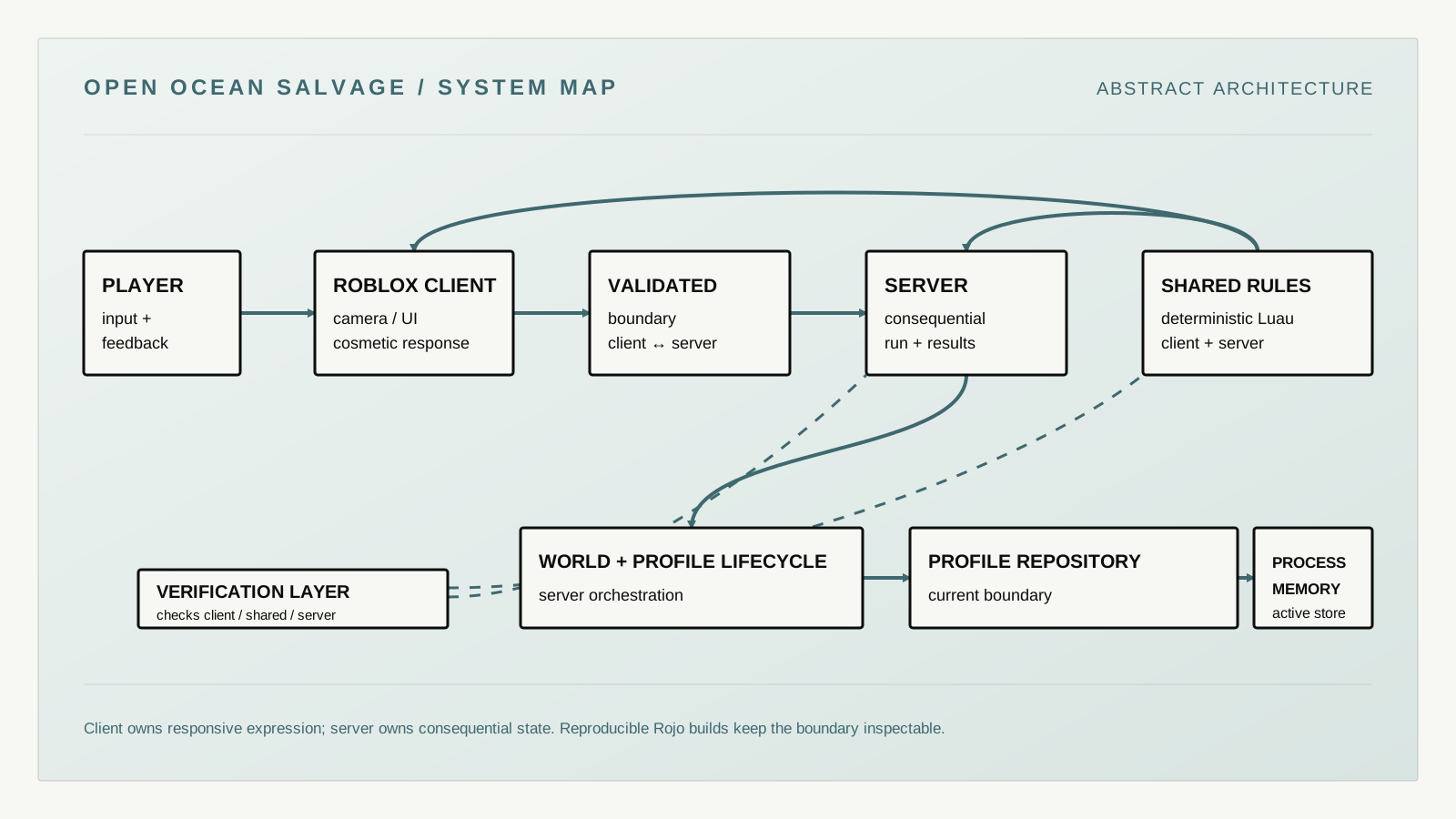
System architecture
A validated client/server boundary keeps responsive play close to the player while consequential state stays server-owned.
- Player
Provides input and reads the running experience.
Component 1 - Roblox client
Owns input, camera, UI, cosmetic feedback, and responsive motion targets.
Component 2 - Validated boundary
Checks the exchange between client intent and server consequence.
Component 3 - Server
Owns consequential run, cargo, progression, economy, hazards, encounters, and results.
Component 4 - Shared deterministic Luau rules
Feeds the same rule definitions to client and server.
Component 5 - World + profile lifecycle
The server orchestrates world state and profile lifecycle.
Component 6 - Profile repository
The persistence boundary for profile data.
Component 7 - Active process-memory store
The current profile backend in this formative slice.
Component 8 - Verification layer
Checks client, shared, and server behavior.
Component 9
Relationships
- Playerinput / feedbackRoblox client
- Roblox clientrequestValidated boundary
- Validated boundaryvalidatedServer
- ServerresultValidated boundary
- Shared deterministic Luau rulesshared rulesRoblox client
- Shared deterministic Luau rulesshared rulesServer
- ServerorchestratesWorld + profile lifecycle
- World + profile lifecycleusesProfile repository
- Profile repositorycurrent backendActive process-memory store
- Verification layerchecksRoblox client
- Verification layerchecksShared deterministic Luau rules
- Verification layerchecksServer
Reproducible Rojo builds connect a player to the Roblox client, across a validated boundary to the server and back. Shared deterministic Luau rules feed client and server. The client owns input, camera, UI, cosmetic feedback, and responsive motion targets; the server owns consequential run, cargo, progression, economy, hazards, encounters, and results. The server orchestrates world and profile lifecycle; the profile repository currently resolves to an active process-memory store. A verification layer checks client, shared, and server behavior.
Evidence
- V11 verification
- 81 spec files / 1,083 passed / 0 failures.
- Studio checks
- 18/18 one-client and 18/18 exactly-two-client checks.
- Build reproducibility
- Two deterministic builds were byte-identical.
- Implemented slice
- Six zones, six boats, and the Hunter culmination are implemented.
Limitations
- Working title; no current representative device, general access, cloud multiplayer, balance, retention, or commercial proof.
- Persistence and telemetry are inactive.
- No current approved gameplay capture.
- Landing-page resolution does not prove eligibility or client launch; no fresh non-owner V11 join has been verified.
- Ages 16+ and trusted friends; free, max 2 players; desktop, mobile, and tablet enabled; console and VR disabled; private servers off.
Why it exists
Fight the waves going out. Ride the waves coming home.
The farther you go, the better the salvage—but nothing is yours until you reach shore.
Open Ocean Salvage is an active vertical slice built around a simple pressure: risk the run for a better haul, then make it home with the result.
Access and current state
This is a playable formative Public Beta in active development and pre-launch. It is free for a maximum of two players; desktop, mobile, and tablet are enabled, while console and VR are disabled and private servers are off.
A landing page resolving does not prove eligibility or client launch. Access is limited to ages 16+ and trusted friends, and no fresh non-owner V11 join has been verified.