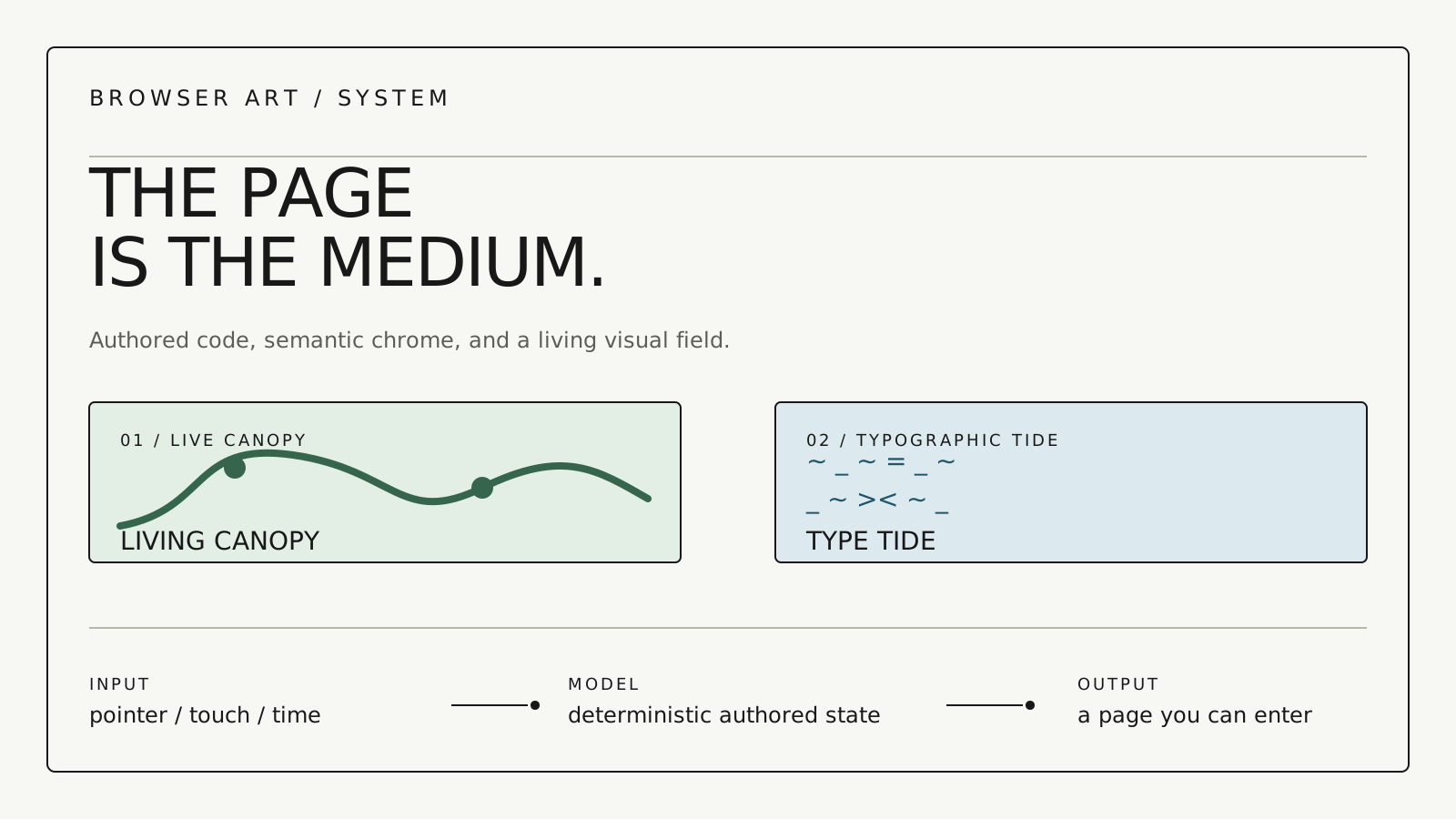
Two interactive works where authored code, semantic page structure, and a living visual field meet in the browser.
Technical notes: each detail route renders its artwork directly; the gallery records its medium, date, and provenance without turning the work into a screenshot catalog.
A responsive botanical-computational artwork built from the Living Margin's connected branch material.
Created
Medium
Canvas 2D
Provenance Original code-native browser artwork derived from Fate's recorded Living Margin branch material; no third-party or generated media.
How it works
The collection routes into two self-contained semantic pages. Each page keeps its visual plane decorative while titles, descriptions, navigation, and controls remain ordinary HTML.
Living Canopy maps one connected branch topology into a settling Canvas simulation. Type Tide advances a deterministic shoreline and shark state, translates it into ASCII materials, and renders the same work through WebGL2 or a Canvas fallback.
Interaction and accessibility
Living Canopy responds to bounded gusts and settles into true idle. Type Tide offers a semantic Pause or Resume control. Both works provide a Reduced Motion still, preserve native touch gestures, and keep their canvases hidden from assistive technology behind a text equivalent.
Evidence and limits
Prior deterministic receipts cover 57 Living Canopy checks and 85 Type Tide V7.1 checks. Those receipts do not claim universal device, performance, or accessibility certification. The works are code-native and use no third-party or generated media; source remains private, with no source or remix action.